Why Sophisticated Buyers Choose This Corner of Florida
Florida is a large state. The question of where to land inside it is a real one, and most buyers researching a move here are not choosing between Florida and somewhere else — they have already decided on Florida. They are choosing between markets.
Jupiter and Palm Beach County occupy a specific position in that decision. They offer the privacy and pace of a coastal town without the transactional density of Miami or the compressed island formality of Palm Beach. What draws people here is usually some combination of five things: the tax environment, the private golf, the water access, the schools, and the particular kind of quiet that exists in a place where most of the people who live there chose it deliberately.
None of these are abstract. The tax savings for a high-income earner relocating from New York or California can be measured precisely. The golf clubs have waitlists, initiation bonds, and distinct cultures. The waterfront is genuinely navigable. The schools have ratings. The quiet is real — and it requires some calibration if you are arriving from a city.
"Most people who move here say, within a year, that they waited too long. The ones who say they moved too soon are almost impossible to find."
The geography matters, too. Jupiter sits at the northern edge of Palm Beach County, roughly 90 miles north of Miami and 15 miles north of Palm Beach Island. The Treasure Coast begins just north of here — Hobe Sound, Stuart, Sewalls Point — and operates on a quieter register still. Understanding which part of this stretch fits is the first real question for any relocating buyer.
The Tax Advantage — What It Actually Means
Florida has no state income tax, no estate tax, and no inheritance tax. For buyers relocating from high-tax states, this is often the precipitating factor — but the details matter more than the headline.
Establishing Florida Domicile
Tax savings require establishing legal domicile — not simply spending time here. That means filing a Declaration of Domicile, updating your driver's license, registering to vote, and spending the majority of the calendar year in Florida. Most buyers also update estate documents, beneficiary designations, and entity registrations. Carla works with a network of Florida tax attorneys and estate planners who specialize in this transition. The process is straightforward; the planning around it requires professionals who know this market specifically.
The savings are real and they compound. An individual earning $1M annually pays no state income tax in Florida versus roughly $109,000 in New York or $133,000 in California. Over a decade, adjusted for growth, this is a material number — often exceeding the cost of the home itself.
Property taxes in Florida are also generally lower than comparable northeastern markets, particularly for primary residences that qualify for the Homestead Exemption, which caps annual assessment increases at 3% and reduces taxable value by up to $50,000. On a $5M home, the effective tax rate after Homestead is meaningfully lower than it would be in Westchester, Greenwich, or the New Jersey suburbs.
The point is not that the tax advantage alone justifies the move. It is that it removes a financial objection that is sometimes used to delay a decision that has already been made on other grounds.
Understanding the Geography — These Are Not Interchangeable Places
A common error among buyers new to this market is treating the coastal communities between Palm Beach Island and Hobe Sound as a single undifferentiated stretch. They are not. Each has a distinct character, price profile, and lifestyle orientation. Getting this right early saves time and avoids the experience of buying in one community and spending the following year wishing you had bought in another.
The largest and most diverse of the northern Palm Beach markets. Golf communities with serious clubs, Intracoastal and river access, public and private school options, and enough commercial infrastructure to live comfortably without a long drive. Not a beach town in the traditional sense — the beach is a short drive, not a walk.
A barrier island with some of the most private estate properties in Florida. No commercial development. Ocean on one side, Intracoastal on the other. The Jupiter Island Club — one of the oldest private clubs in the country — is here. Buyers come for absolute privacy. Prices reflect it.
The small town directly north of Jupiter, on the Loxahatchee River and Intracoastal. Less private club culture, more genuine waterfront residential character. Often overlooked by buyers focused on the golf communities, which keeps prices more accessible for what you get.
Where Treasure Coast sensibility begins. Jonathan Dickinson State Park, the Jupiter Island Club, and properties that feel deliberately quiet. Hobe Sound attracts buyers who want even less visibility than Jupiter Island provides — and who tend not to advertise having found it.
More suburban in character, with excellent golf communities — BallenIsles, Frenchman's Creek, Panther National — and public and private school options. Proximity to PBI Airport is a practical advantage. Buyers who want new construction, amenities, and a more active social community often land here.
The formal center of Palm Beach County's luxury market. Architectural review boards, historic preservation requirements, Worth Avenue, and prices that reflect the island's international reputation. Buyers here are typically choosing a specific address as much as a lifestyle. Many own here and in Jupiter simultaneously.
A note on Jupiter Island specifically, because it deserves more than a card.
The island sits just south of Hobe Sound, connected to the mainland by two bridges and separated from Jupiter proper by roughly fifteen minutes and a meaningful difference in atmosphere. It is technically Martin County — a detail that matters for taxes and governance — but buyers in this corridor do not experience the county line as a boundary. What they experience instead is a quieter corridor. The island is a few hundred feet wide in certain sections, ocean on one side, Intracoastal on the other, and essentially nothing commercial on either.
Some buyers who begin their search in Jupiter's private golf communities eventually find themselves drawn further north. Not because Jupiter doesn't deliver what it promises — it does — but because a different question emerges over time: how much visibility, even the quiet kind, is still more than they want? Jupiter Island is the answer to that question. There are very few places designed around being seen. The island's governance matters here. Its zoning structure, limited commercial development, and long-standing preservation philosophy are a large part of why the atmosphere has remained so consistent over time. Some properties have remained in the same families for generations. That continuity changes the rhythm of the market in ways buyers often feel before they fully understand it.
For buyers at the relocation stage, Jupiter Island may not be the immediate destination — the schools question alone tends to direct families toward Jupiter or Palm Beach Gardens — but it is worth understanding as part of how this corridor actually functions. It is where the logic of this market takes certain buyers eventually. A fuller picture of the island, including how its market actually works and what the different property types mean, is here: Jupiter Island — A Private Guide →
Private Golf Communities — The Landscape Before You Start Looking
For buyers whose relocation decision centers on private golf, the community selection and the home selection are inseparable. The club you join determines where you live, and the waiting list situation at any given moment determines what is actually possible. Understanding this landscape before you begin saves significant time.
| Community | Club Type | Membership Fees | Homes | Price Range |
|---|---|---|---|---|
| The Bears Club | Private Golf (Jack Nicklaus) | Contact Club | 92 estates | $5M – $30M+ |
| Admirals Cove | Golf + Deep-Water Marina | Contact Club | 891 homes | $2M – $25M+ |
| The Loxahatchee Club | Private Golf | Contact Club | ~300 homes | $1.5M – $8M |
| Jonathan's Landing | Golf + Marina | Contact Club | ~1,000 homes | $800K – $8M |
| BallenIsles (PBG) | Private Golf (3 courses) | Contact Club | ~1,300 homes | $700K – $6M+ |
| Panther National (PBG) | Private Golf (Tiger Woods / Justin Thomas) | Contact Club | 218 estates | $3M – $20M+ |
| Frenchman's Creek (PBG) | Private Golf + Amenities | Contact Club | ~640 homes | $1M – $7M+ |
The table above gives you a starting orientation. What it cannot convey is the current membership availability, the social culture inside each club, which communities have active waitlists, and where off-market homes exist. These things shift. An agent who is present in these communities — not just selling in them — tracks this on an ongoing basis.
Membership and Purchase Are Separate Decisions — Until They Are Not
In most private club communities, club membership is not automatic upon purchase. Some clubs allow non-member residents; others effectively require membership. Some have waitlists that can run 12–24 months. In a few communities, off-market access to a home is the only way to get both the property and membership availability simultaneously. Understanding this before you make an offer is not a minor detail.
Waterfront — What "Water Access" Actually Means Here
Buyers arrive with the phrase "waterfront" meaning different things. In Palm Beach County and the Treasure Coast, there are several distinct types of waterfront, and they produce very different lifestyles.
Oceanfront
Direct ocean access on the barrier islands — Jupiter Island, Palm Beach Island, Singer Island. The rarest and most expensive. These properties offer the ocean as a physical presence rather than a drive. Wind, salt exposure, and insurance complexity are real considerations. The buyers who choose oceanfront have typically decided that nothing else will do.
Intracoastal Waterway
The protected waterway running parallel to the coast is where most serious boaters buy. Intracoastal homes with dock access allow you to leave the dock and reach the ocean inlet within minutes — or cruise north and south indefinitely. Dock size, water depth, and bridge clearance matter. These specifications are part of every Intracoastal search for buyers with vessels of 40 feet or more.
River and Canal Waterfront
The Loxahatchee River, which flows through Jupiter, is one of Florida's two federally designated Wild and Scenic Rivers. Communities like Admirals Cove and Jonathan's Landing sit on navigable water that connects to the Intracoastal. Canal-front homes in other communities offer dock access without the open-water exposure.
"The distinction between Intracoastal depth at mean low water and a developer's marketing language about 'deep water' is a conversation worth having before you close."
The practical dimension: dock permits, seawall condition, bridge clearances, and navigable depth are deal-specific details that require verification. A buyer who plans to keep a 60-foot sportfisher at the dock needs different specifications than one arriving in a center console. These are questions that should be settled early, not discovered after contract.
Schools — What the Ratings Reflect and What They Don't
Jupiter and northern Palm Beach County are served by Palm Beach County Public Schools, which offers a range of public and private school options. School assignments are determined by property address — families should verify the assigned schools for any specific property before making an offer.
The School District of Palm Beach County provides an official address-based lookup tool. Use it to confirm the assigned elementary, middle, and high school for any specific property before making an offer: Palm Beach County Public School Zone Lookup →
For families researching private schools in Jupiter, Palm Beach Gardens, and the surrounding area, a complete directory of private schools in northern Palm Beach County and Martin County is available here: Private Schools Directory → Private school admission is not based on home address — contact each school directly for current admissions information.
| School | Type | Level | Notes |
|---|---|---|---|
| Jupiter High School | Public | High | Verify current rating with Palm Beach County School District |
| Independence Middle School | Public | Middle | Verify current rating with Palm Beach County School District |
| Limestone Creek Elementary | Public | Elementary | Verify current rating with Palm Beach County School District |
| Timber Trace Elementary | Public | Elementary | Verify current rating with Palm Beach County School District |
| The Benjamin School | Private (PreK–12) | K–12 | Palm Beach Gardens (private, PreK–12) |
| The Weiss School | Private (Gifted) | K–8 | Jupiter; specialized gifted education |
| Palm Beach Day Academy | Private | PreK–8 | Palm Beach Island; longstanding Palm Beach institution |
A note that comes up frequently: buyers relocating from major northeastern markets sometimes arrive with questions about the local school landscape. Both public and private options are available — families should use the official Palm Beach County school zone lookup to verify public school assignments for specific properties, and contact private schools directly for admissions information.
What to Expect During the Search — Honest Guidance
The Jupiter and Palm Beach County luxury market does not behave like most buyers expect, particularly those coming from markets where inventory is abundant and the search is a process of elimination over dozens of options.
Inventory Is Compressed
At any given time, there are relatively few homes available in the communities that most relocation buyers are targeting. The Bears Club has 92 total homes. Admirals Cove has 891, but the price and feature combinations that attract relocation buyers narrow that considerably. When you add the constraint of a specific golf club, water type, bedroom count, and timeline, the number of active options is often in single digits.
Off-Market Is Real
A meaningful percentage of the best properties in these communities never reach MLS. They sell through agent-to-agent conversations, relationships with property owners who have not yet listed but will for the right buyer, and developer-to-broker pipelines for new construction. Buyers who limit their search to what is publicly visible are limiting their options materially.
Timeline Expectations
Buyers who arrive with a clear set of priorities — and some flexibility within them — typically identify their home within two to four months. Buyers who are still resolving the fundamental question of which community fits them can spend considerably longer. The most efficient use of early time in the search is not looking at properties but getting specific about what matters most. That conversation is where Carla spends the first hour with every new relocation client.
The Questions That Actually Matter Early
Golf or water — if you had to choose one, which is it? Are children's schools a constraint or a preference? How much of the year will you be here — is this your primary residence or a second home? Do you want a community with a social calendar, or a private setting where your life is not organized around club events? The answers to these questions narrow the field more than any other filter.
The Seasonal Market Dynamic
Palm Beach County operates on a seasonal rhythm that affects inventory and pricing. The winter season — roughly November through April — brings the highest buyer activity and the fewest motivated sellers. Summer and early fall often produce better negotiating conditions and more motivated sellers who have watched the season end without a sale. Timing a relocation search around this cycle, when possible, is a practical advantage.
Getting Oriented — The Practical Side of Moving Here
Climate
Winters are the reason people come — consistently mild temperatures from November through April, with almost no humidity and reliable sunshine. Summers are warm, humid, and punctuated by afternoon thunderstorms that arrive predictably and pass quickly. Hurricane season runs from June through November; the last major storm to hit Jupiter directly was Wilma in 2005. Insurance and preparedness are real considerations, not marketing disclaimers.
Getting Around
This is not a walkable market. A car is essential, and most households here have two. The good news is that traffic — while it has worsened — is nothing like what most relocating buyers are leaving behind. The drive from Jupiter to Palm Beach International Airport is roughly 25–30 minutes on I-95. Private aviation through KOBE (North Palm Beach County General Aviation Airport, just south of Jupiter) is convenient for those who use it.
Healthcare
Jupiter Medical Center is the primary hospital, a 340-bed regional facility that handles most needs. The Cleveland Clinic Florida campus is in Weston (about 80 miles south), and multiple major hospital systems have presences throughout Palm Beach County. Buyers coming from major medical centers in New York or Boston sometimes note a difference in specialist density; for most healthcare needs, the local infrastructure is adequate.
The Social Adjustment
This is the part no one writes about directly. Jupiter and the surrounding communities are genuinely social — the private clubs are central to that social life, and much of what happens here happens through relationships. Buyers who are accustomed to urban anonymity sometimes find the adjustment more significant than they expected, in both directions. Some people find the community warmth immediately comfortable. Others take a season or two to settle in. Neither experience is unusual.
Questions That Come Up Before Every Relocation Search
The honest answer is that these three communities attract different buyers for substantive reasons. Jupiter is for buyers who want private golf, waterfront, or both, with children in schools and a lifestyle that does not require the formal Palm Beach calendar. Palm Beach Gardens is for buyers who want new construction, strong golf communities, and proximity to PBI Airport in a more suburban setting. Palm Beach Island is for buyers who want the specific prestige and formality of the island — historic architecture, Worth Avenue, and a social life organized around the island season. Many buyers own in two of these simultaneously. The first conversation is about which one becomes the primary home.
The most useful first conversation is one that is not about property at all. It is about priorities — what the move is for, what the daily life looks like, whether the community social calendar matters, what compromises are acceptable and which are not. From that conversation, the geographic and community constraints become clear. Then we look at what exists, what is off-market, and what timing looks like. The search itself is usually faster than buyers expect once the prior questions are resolved.
It changes it in a few meaningful ways. First, the school catchment constraint is removed — you can optimize for the home and community rather than the zone. Second, the domicile question becomes a planning matter rather than an immediate requirement: if the plan is to establish Florida domicile in three years, that planning should begin now. Third, the community social calendar matters more for a second home than for a primary — you are arriving for a season, not a life, and you want a community that functions well for seasonal residents. Several of the private golf communities here are built around seasonal use; others skew toward year-round residents. Getting this right at the start avoids regret.
It is real and significant. In a community like The Bears Club, with 92 total homes, any given year might see only three or four publicly listed. But several more change hands privately — through agent relationships, estate situations, and owners who prefer not to list. An agent who has been present in these communities for decades has a different set of relationships than one who simply has MLS access. The practical implication: if you begin a Bears Club search expecting to find it on Zillow, you will likely miss the best options.
Summer and early fall — roughly May through October — historically produce better negotiating conditions. Sellers who did not move their property during the peak winter season are often more motivated. Competition from other buyers is lower. The tradeoff is that inventory, while more negotiable, is not necessarily larger. The best time to buy is when the right property is available; the seasonal strategy is more about leverage than inventory. Buyers who are flexible on timing can use this to their advantage.
The process involves filing a Declaration of Domicile with the county, updating your driver's license and vehicle registration, registering to vote, and — critically — spending more than half the calendar year in Florida. Estate documents, trusts, and any existing state tax filings should be reviewed and updated. The process is not complicated, but it requires professionals who know Florida specifically: a Florida estate attorney and a CPA familiar with multi-state domicile transitions. Carla maintains relationships with both and can make direct introductions. The ideal time to begin is before you close on the property, not after.
How This Works in Practice
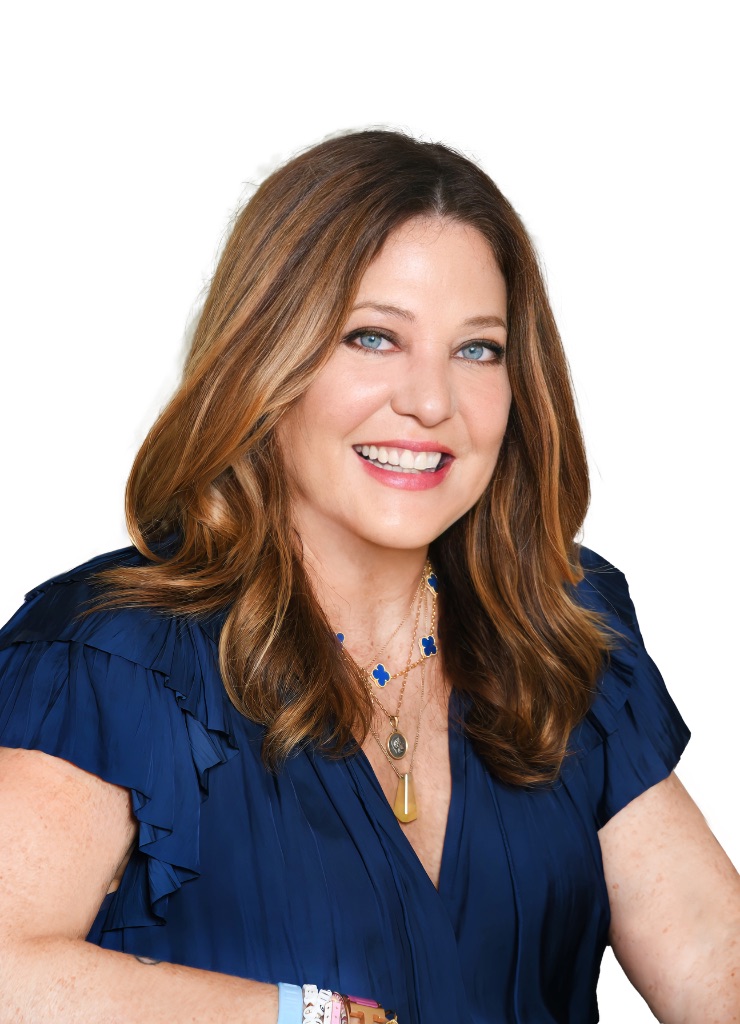
Carla Christenson has been the agent of choice for relocation clients — executives, professional athletes, families from the Northeast and West Coast — for 29 years. She is the #1 Top Producer at Sotheby's International Realty in Jupiter.
What relocation clients describe, consistently, is that the search is faster and more decisive than they expected. Part of that is the off-market access — the ability to see things before they list, or to reach property owners directly. Part of it is the community knowledge: understanding which clubs have waitlists, which communities have the right school zone, where the water depth actually allows the vessel they are bringing.
The work starts well before a contract. It starts with a conversation about what the move is actually for. One focused conversation often clarifies what weeks of searching cannot. Carla is useful at this stage because she can usually identify the practical mismatch before it becomes expensive or emotional. The questions that matter most at this point are rarely about the property itself.
A Private Conversation, Not a Listing Search
If you are in the early stages of researching a relocation to Jupiter or Palm Beach County, the most useful thing is a direct conversation — not a search of available inventory. The inventory will be there when you are ready for it. The conversation helps you decide whether you are ready, and what ready looks like. Call (561) 307-9966 or use the contact form below.